Bouldering vs Rope Climbing: Where to Start
If you’re new to climbing, your first visit to a gym can feel like a lot to take in. There are tall walls, shorter walls, ropes, harnesses, climbing shoes, and people moving in ways that make everything look harder than it is.
The good news is that you do not need to know everything before you start.
At Rose Rock Climbing, Yoga, and Fitness, beginners can try several styles of climbing, including bouldering, auto-belays, top-rope, and lead climbing. Each one offers a different experience, so the best place to begin depends on what feels most comfortable and exciting to you.
Here’s how bouldering and rope climbing compare, and how to decide where to start.
Bouldering: A Simple Way to Start Climbing
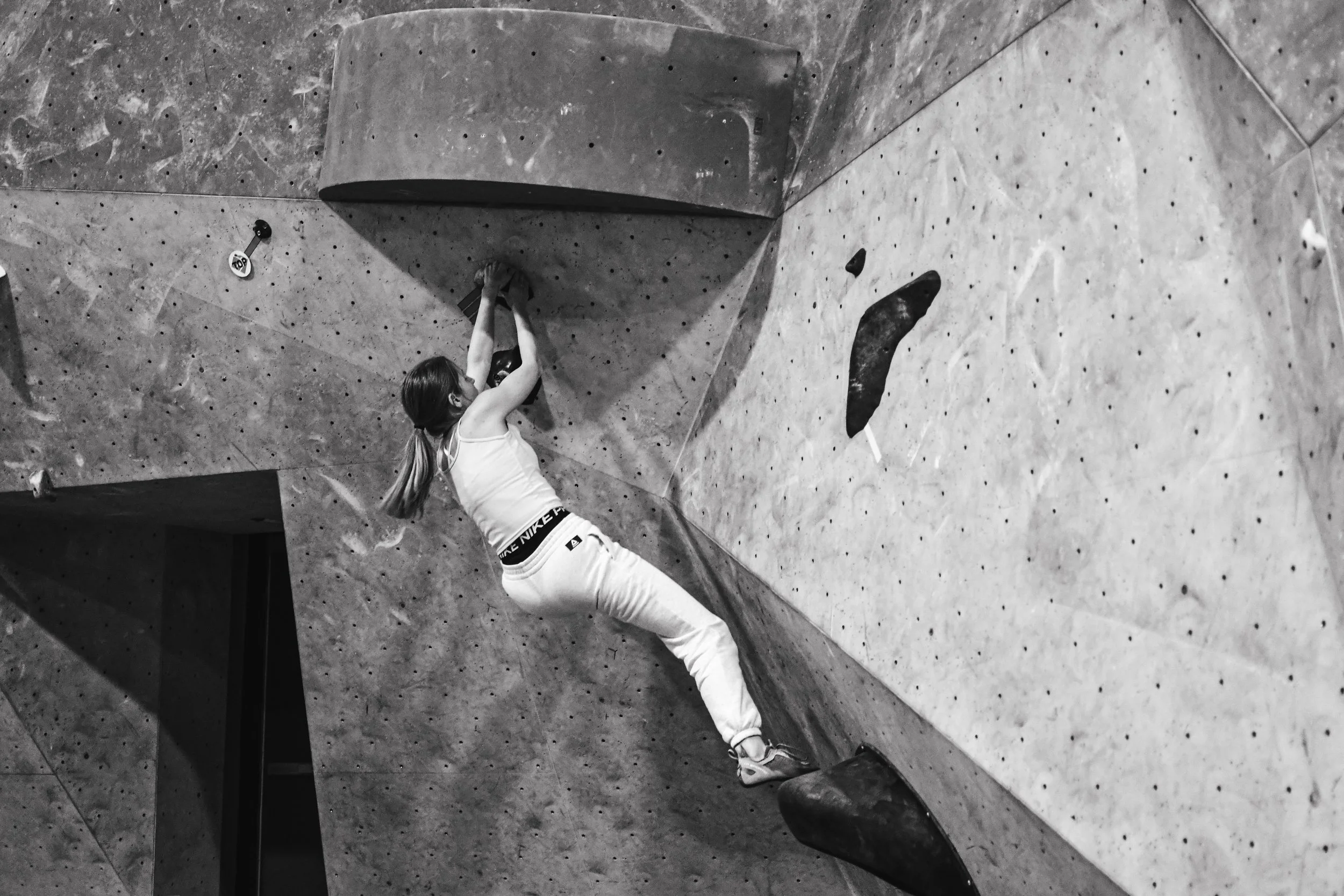
Bouldering happens on shorter walls without ropes or harnesses. Instead, climbers use thick padded flooring below the wall to help cushion falls.
Because the walls are shorter and there is no rope system to learn right away, bouldering is often one of the easiest ways for beginners to get started. You climb a problem—what climbers call an individual route—come back down, rest, and try again.
Why beginners often start with bouldering
Bouldering can be a great fit if you want to:
try climbing without learning rope systems first
stick to shorter, more approachable walls
solve movement-based challenges
climb at your own pace
make your first visit feel social and low-pressure
get a workout that blends strength, balance, and problem-solving
One of bouldering’s biggest advantages is its simplicity. Once you understand the gym’s rules and put on your climbing shoes, you can start climbing.
It also shows beginners an important truth right away: climbing is not just about upper-body strength. Footwork, balance, body positioning, and route-reading matter just as much.
Rope Climbing: More Height, More Systems
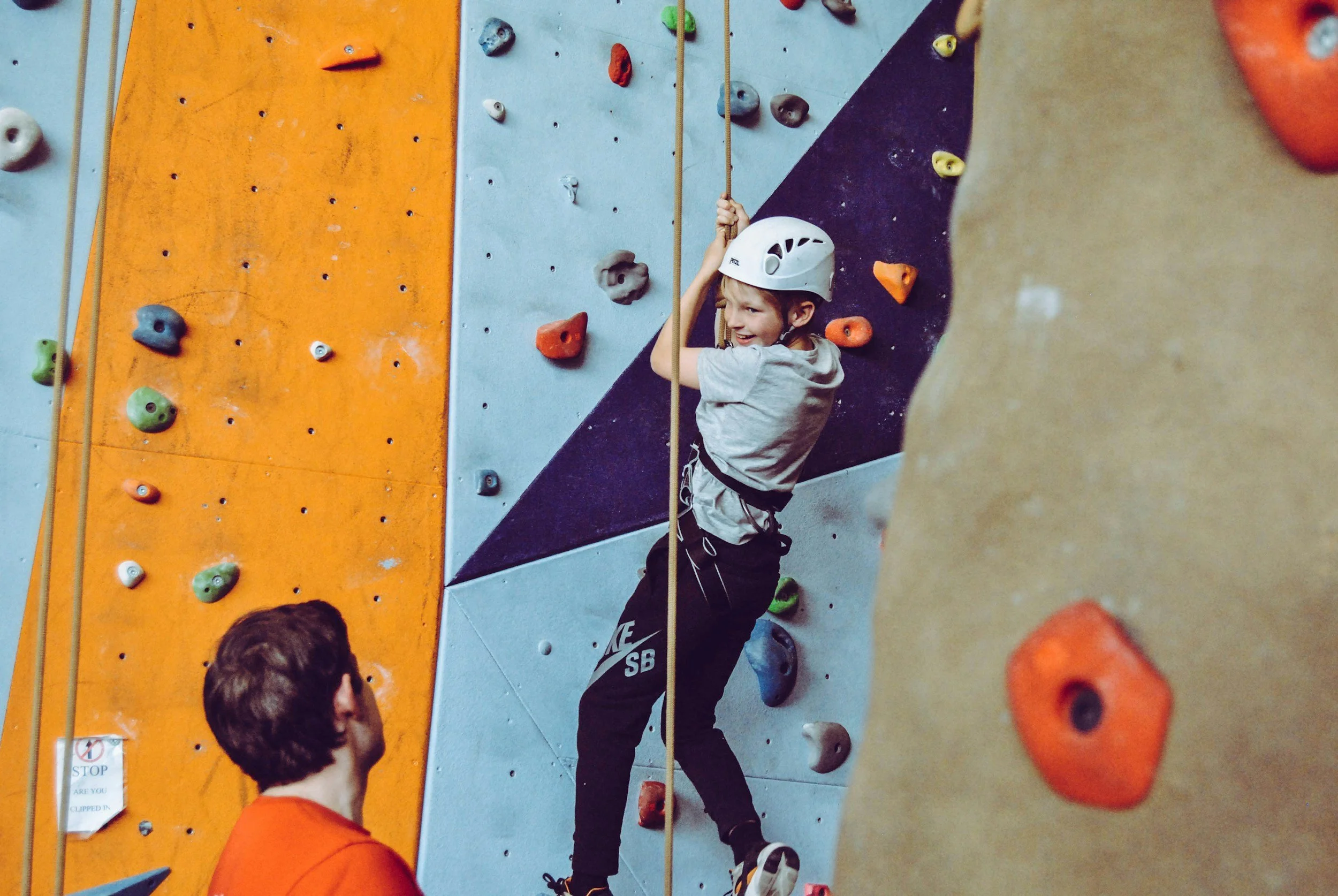
Rope climbing takes place on taller walls and uses a rope and harness as part of the safety system.
At Rose Rock, beginners may encounter three main types of rope climbing: auto-belays, top-rope, and lead climbing. Each offers a different level of support and a different learning curve.
Auto-belays
An auto-belay is a mechanical device that manages the rope as you climb. You clip into the system, climb upward, and the device lowers you safely when you come off the wall.
For beginners who want to experience taller walls—especially those visiting without a climbing partner—auto-belays are often an excellent place to start.
Top-rope climbing
With top-rope climbing, the rope runs from the climber up through an anchor at the top of the wall and back down to a belayer on the ground. The belayer manages the rope while the climber moves up the wall.
Top-rope is a popular way to learn rope-climbing basics because the safety system supports the climber throughout the route. It can also be a strong option for friends or family members climbing together after completing the appropriate orientation or instruction.
Lead climbing
Lead climbing is a more advanced form of rope climbing. Instead of climbing with the rope already anchored above, the climber clips the rope into protection points while moving upward.
Because it requires more technical skill and confidence, lead climbing is usually not the place for a brand-new climber to begin. It is better seen as a progression point once you feel comfortable with climbing movement and rope systems.
Bouldering vs Rope Climbing: Which Is Better for Beginners?
Neither option is automatically better. The best starting point depends on what you want from your first climbing experience.
|
|
|
|
|
|
|
|
|
|
|
|
|
|
|
|
|
|
|
|
|
|
|
|
|
|
You also do not have to choose only one. Many climbers enjoy both bouldering and rope climbing because each develops different skills and offers a different kind of challenge.
Which Type of Climbing Should You Try First?
Start with bouldering if...
Start with bouldering if you want the most straightforward introduction to climbing movement. It lets you focus on body position, foot placement, and problem-solving without also learning rope systems on day one.
Bouldering also tends to feel social. Friends can work on the same problem, compare approaches, and encourage each other between attempts.
Try an auto-belay if...
Try an auto-belay if you want to climb taller walls or if you are visiting on your own. It gives you the feel of rope climbing without requiring a partner to belay.
Try top-rope if...
Try top-rope if you want to start learning rope-climbing systems and either have a partner or plan to take an introductory class or orientation. It introduces the communication, equipment, and safety habits that become more important as you progress.
Work toward lead climbing if...
Work toward lead climbing if you already have some climbing experience and want to build more advanced rope skills. For most beginners, it is a goal to grow into rather than a first-day option.
What Do You Need for Your First Visit?
Not much.
You do not need to arrive strong, experienced, or fully outfitted with gear. Rose Rock offers rental equipment and several beginner-friendly ways to get started, so you can try climbing without buying everything up front.
For a first visit, comfortable athletic clothing that lets you move freely is a good place to start. If you do not own climbing shoes, you can rent them.
Most importantly, come ready to learn. Your first climb may feel awkward, and that is completely normal. You might fall off easy routes, struggle to place your feet, or realize that something that looks simple is more challenging than expected.
That is part of the experience.
You Do Not Need to Be Strong Before You Start
One of the biggest misconceptions about climbing is that you need to get strong before trying it.
You do not.
Climbing helps build strength, coordination, balance, mobility, and body awareness over time. Many beginners improve quickly once they learn how to use their feet, shift their weight, and move more efficiently.
The goal of a first visit is not to climb the hardest wall in the gym. It is to find a style of climbing you enjoy enough to come back and try again.
Start Your First Climb at Rose Rock
Whether you begin on the bouldering walls, clip into an auto-belay, or start learning the basics of rope climbing, Rose Rock offers several ways to discover what you enjoy.
Once you find your preferred style, there is plenty of room to keep progressing—from beginner climbing to top-rope, lead climbing, training boards, fitness, yoga, and more.
New to climbing? Start at Rose Rock and find the kind of climbing that keeps you coming back.